

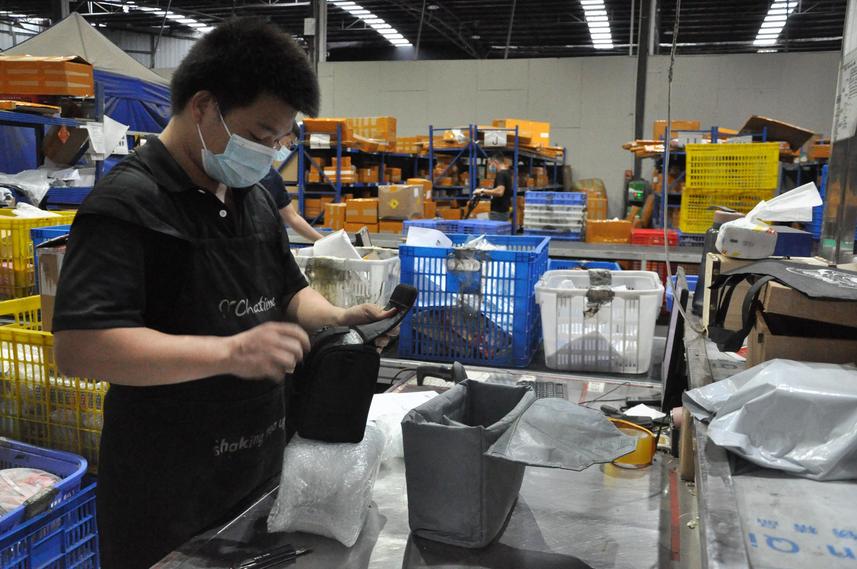
Anime Figure Packing Guide: Stop Damage Before Dispatch
Direct answer: a reliable anime figure packing workflow is inspection, immobilization, double-carton protection, final measurement, and photo evidence. The outer carton is not an afterthought. It is the part of the shipment that must absorb the knocks, stacking pressure, and handling changes that happen after the parcel leaves the warehouse.
Small sellers often discover the problem only after they grow. At ten orders a week, one person may remember which accessory belongs to which figure and how each box was packed. At fifty or a hundred orders, memory is not a control system. Similar characters, alternate faces, bases, bonus cards, and different box editions begin to look alike. One missed part or one crushed window box can wipe out the margin on an otherwise good sale.
This article is written for marketplace, live-commerce, and independent-store sellers that need a repeatable packing method rather than a one-off rescue job.
1. Create a packing card for each SKU
The packing card should state the SKU, product name, retail-box dimensions, net weight, fragile points, accessory count, and whether the item can ship in its retail box or needs an additional inner carton. Add a plain note such as “clear front window,” “loose sword,” “resin hairpiece,” or “do not stack accessories on top.” It lets the packer make the right decision without relying on memory.
At receiving, count the units and the listed accessories, then photograph visible condition. For a collectible where box condition matters, photograph the front, back, and four corners before storage. For a figure with separate parts, photograph the grouped accessories and the tray. This photo set is the baseline for later buyer questions and an easy way to distinguish inbound damage from transit damage.
Bondjet's fulfillment workflow supports this sort of inspection photo record, SKU management, accessory verification, customized packing, and outbound checking. It is useful precisely because the warehouse can follow a defined instruction instead of treating every box as generic merchandise.
2. Immobilize the product before adding cushioning
Cushioning cannot do its job if the item is already moving inside its own packaging. Check that the figure, base, and accessories are seated in the manufacturer's tray or foam. Bag and secure loose parts. If the original insert is missing, do not guess with a layer of bubble wrap around a delicate part; pause and choose a protective insert or packing method suitable for that product.
The outer retail box also needs to stay still. Use an even protective wrap and corner protection, then place it in a correctly sized shipping carton. Keep soft material around the box so it cannot touch the carton walls. A void is not harmless: over a long trip, a box that can slide will eventually hit an edge.
Do not over-compress the pack. Excess pressure can dent a window box, bow a thin cardboard lid, or transfer a corner impact directly to the product. The test is practical: after closing the carton, there should be no free movement, but the carton should not be forced shut.
3. Use the final packed dimensions for the shipping decision
The dimensions that matter are not the factory box dimensions listed online. They are the length, width, height, and actual weight of the sealed shipping carton. This affects both safety and cost.
For example, one documented US-bound air service calculates volumetric weight as length × width × height ÷ 6000 and uses the greater of volumetric and actual weight. Its normal parcel screen is longest side under 120 cm, second-longest side under 75 cm, girth under 265 cm, and actual weight under 22 kg. If the finished parcel exceeds a route screen, additional charges or a different route can apply. The exact eligibility and current rate must be confirmed for the actual shipment.
That is why packing and quotation should happen in the same workflow. A seller who quotes from a product-page dimension and later adds a second carton may unintentionally change the chargeable weight. Conversely, trying to save space by removing protective room is a false economy when the buyer expects a collector-grade box.
4. Make the outbound photo set part of the order record
Use a consistent outbound set: finished carton on a scale, tape seam and corners, shipping label, and the item condition photos already taken at packing. If the order includes several SKUs, capture the pick list or SKU labels before sealing. A warehouse photo is evidence of condition and process, not a guarantee that no carrier incident can occur. Still, it makes customer service much faster because the seller can respond with facts.
It also helps with internal quality control. When a carton is repeatedly arriving with corner damage, compare the photo sets, carton size, packing card, and last-mile route. The improvement may be a different carton grade, more space at a vulnerable window, or a rule for removing and securing a loose accessory. The answer is not always “add more wrap.”
5. Confirm the route and its limits before you hand over the parcel
Packing has to match the shipping service. Some services require a square paper carton and reject irregular packages such as unboxed wood crates or odd shapes. Many US services do not serve PO boxes, military addresses, or particular island and remote destinations. Some also restrict batteries, magnets, brands, or intellectual-property-related items. An anime figure with a licensed character should never be assumed eligible merely because it is physically well packed.
Ask the logistics team to verify product eligibility from the product photos and declarations, then confirm the destination ZIP code, dimensions, chargeable weight, customs treatment, and current route availability. Do not conceal the product or change its description to force a shipment through. Incorrect declaration can create a customs or claim problem that packaging cannot fix.
Service boundaries and quote entry
Bondjet can organize condition checks, photos, SKU and accessory management, customized protective packing, storage, dispatch coordination, and tracking for high-value products. The service does not make every item or address acceptable to every route, and it does not establish a fixed price, transit promise, or claim payment without the selected route's written terms.
For a quote, provide product photos, SKU list and accessory notes, whether the figure is PVC or resin, destination country and ZIP code, expected order volume, retail and final-carton measurements, declared value, battery or magnet status, and the packing evidence you want. Request a written breakdown of packing work, shipping basis, chargeable weight, route restrictions, tax terms, current transit estimate, and protection or claim conditions.
The best packing guide is the one your warehouse can repeat. When every figure has a packing card, a photo baseline, a no-movement check, and a final measurement, damage prevention becomes an operating habit instead of a last-minute promise.